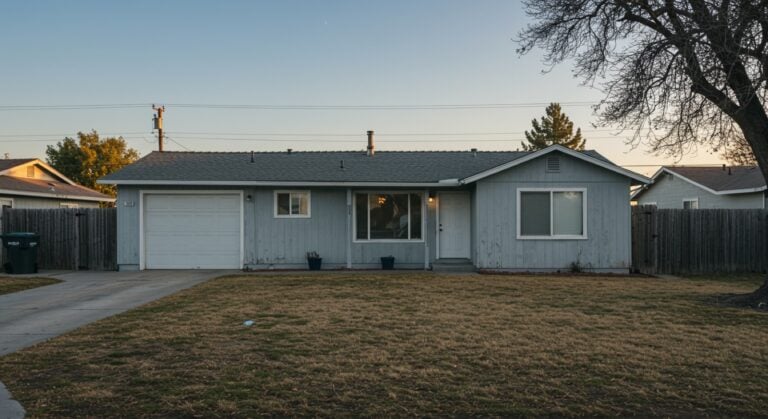
How Do You Sell a House During a Divorce in California?
In California, the marital home is generally community property under Family Code §760, so both spouses must consent and sign to sell it. You have three paths: sell the house and split the proceeds, have one spouse buy the other out, or — if you can’t agree — ask a judge to order the sale. A fast, private cash sale closes in as little as 7 days with no showings.
Sell quickly and privately — cash offer in 24 hours
Drop your address for a fair cash offer. Fast, discreet, no showings, no agent commissions, and a clean split of the proceeds.
Why does the house usually require both spouses to agree?
Under California Family Code §760, property acquired during the marriage while domiciled in California is community property — owned equally by both spouses regardless of whose name is on the title or who makes the mortgage payment. Because both spouses hold an equal ownership interest, both must sign the listing agreement, the purchase contract, and the closing documents. One spouse cannot lawfully sell the marital home over the other’s objection during a divorce.
When the divorce concludes, Family Code §2550 directs the court to divide community property equally absent a written agreement or oral stipulation in open court. That equal-division rule is why most divorcing couples sell the home and split the net proceeds 50/50 — it’s the cleanest way to convert a shared asset into cash each spouse can walk away with.
What are your three options for the marital home?
There are three standard ways to resolve the house in a California divorce. We focus here on the sell-and-split path since it’s the one a cash buyer can move fastest on.
- Sell and split the proceeds. Both spouses sign, the home sells, and the net equity is divided — usually equally per §2550. No one is left tied to the property or the loan.
- One spouse buys the other out. The keeping spouse refinances or pays the leaving spouse for their half of the equity. This depends on income, credit, and qualifying for a new loan alone.
- A judge orders the sale. If the spouses can’t agree, the family court can order the home sold and the proceeds divided, sometimes appointing a referee to manage the sale.
Who ultimately keeps or sells the home is its own decision — see our guide on how to sell a house during a divorce in California for the buyout and court-order details. What happens to the loan is a separate question covered in our mortgage-after-divorce breakdown; in short, both borrowers stay liable until the loan is refinanced or paid off at sale.
How do the ATROs affect timing when you sell?
The moment a divorce petition is filed and served, California Family Code §2040 imposes Automatic Temporary Restraining Orders (ATROs) on both spouses. The ATROs restrain both parties from transferring, encumbering, or disposing of any property — community, quasi-community, or separate — without the other spouse’s written consent or a court order, except in the usual course of business or for the necessities of life.
In practice, that means you can absolutely still sell the marital home while a divorce is pending — but you do it with both spouses’ written consent or with the judge’s sign-off. A clean cash sale where both spouses agree, sign, and split the proceeds satisfies the ATROs cleanly. Selling secretly, or one spouse trying to dispose of the property alone, violates §2040 and can trigger contempt or fiduciary-breach consequences.
Why does a private cash sale appeal during a divorce?
Divorce is already stressful, and a traditional listing piles on more: repairs, staging, weeks of strangers walking through a house two people are trying to untangle, and coordinating showings around a spouse you may no longer live with. A direct cash sale removes all of that. We buy as-is — no repairs, no cleaning, no commissions, no fees — and there are no open houses or buyer financing contingencies to fall through.
It’s also private and predictable. Both spouses get a written cash offer, agree on the number, sign together, and pick a closing date. We close in as fast as 7 days (typically 7-10 days), so the equity is converted to cash both spouses can divide quickly — instead of leaving the home, and the conflict, hanging on the market for months. Whether you’re in the East Bay and need cash home buyers in Oakland or down in the South Bay where we buy houses in San Jose, the process is the same fast, no-showings sale.
Cash sale vs. listing the marital home with an agent
| Factor | Cash sale to Rapid Home Solutions | Listing with an agent |
|---|---|---|
| Time to close | 7-10 days | 45-75 days (plus prep time) |
| Showings & open houses | None — fully private | Ongoing; both spouses must coordinate |
| Repairs & cleaning | None — we buy as-is | Often required to compete |
| Commissions & fees | $0 | Typically 5-6% of sale price |
| Certainty | No financing contingency to fall through | Buyer loans can collapse late |
| Both spouses sign | Yes — clean, ATRO-compliant | Yes — but over a longer window |
What does the cash-sale process look like step by step?
Selling the marital home to a direct buyer is straightforward, and both spouses stay involved at every signature.
- Tell us about the property. One quick call or form — no need for the house to be clean or repaired.
- Get a written cash offer. No obligation; both spouses review the number together.
- Both spouses agree and sign. Mutual written consent keeps the sale fully compliant with the §2040 ATROs.
- Close on your timeline. A neutral title company handles the paperwork and disburses the net proceeds; close in as little as 7 days.
- Divide the proceeds. The equity is split per your settlement or the §2550 equal-division rule.
Ready to convert the marital home into cash both spouses can divide quickly? Request a no-obligation cash offer.
By Steven Williams, Founder & CEO, Rapid Home Solutions
This article is general information, not legal or tax advice. Probate, tax, and real-estate rules are fact-specific — consult a California attorney or tax professional about your situation.
Selling a House During Divorce FAQ (California)
Can you sell a house during a divorce in California?
Yes. You can sell the marital home while a divorce is pending, but because it is community property under Family Code §760, both spouses must consent and sign. The Automatic Temporary Restraining Orders under §2040 require either both spouses’ written consent or a court order, so a mutually agreed cash sale is fully compliant and can close in 7-10 days.
Do both spouses have to agree to sell the marital home?
Generally yes. The home is usually community property owned equally by both spouses, so both must sign the contract and closing documents. If the spouses cannot agree, a California family court can order the home sold and the proceeds divided. A cash sale where both spouses sign together is the cleanest, fastest path — closing in as little as 7 days.
What are ATROs and how do they affect selling the house?
Automatic Temporary Restraining Orders (Family Code §2040) take effect when the divorce petition is filed and served. They restrain both spouses from transferring or disposing of property without the other’s written consent or a court order. You can still sell the home — you just need both spouses’ written consent or the judge’s approval, which a mutually agreed cash sale satisfies.
How are the proceeds split when you sell a house in a California divorce?
Under Family Code §2550, the court divides community property equally absent a written agreement, so most divorcing couples split the net proceeds 50/50. Your settlement agreement can specify a different division. Selling for cash converts the equity quickly so both spouses can divide it and move on, often within 7-10 days of accepting an offer.
Why sell to a cash buyer instead of listing during a divorce?
A cash sale is private, fast, and as-is — no showings, no repairs, no commissions, and no buyer financing that can collapse. That spares two people already in conflict from coordinating open houses for months. Rapid Home Solutions buys as-is and closes in 7-10 days, so the equity becomes cash both spouses can divide. Request your cash offer using the form on this page.
A fast, fair sale on your timeline
Tell us about the home and we'll send a no-obligation cash offer. Close in as little as 7 days, with no repairs or fees.